
Basement Bathroom Rough-In Checklist for Utah Homeowners
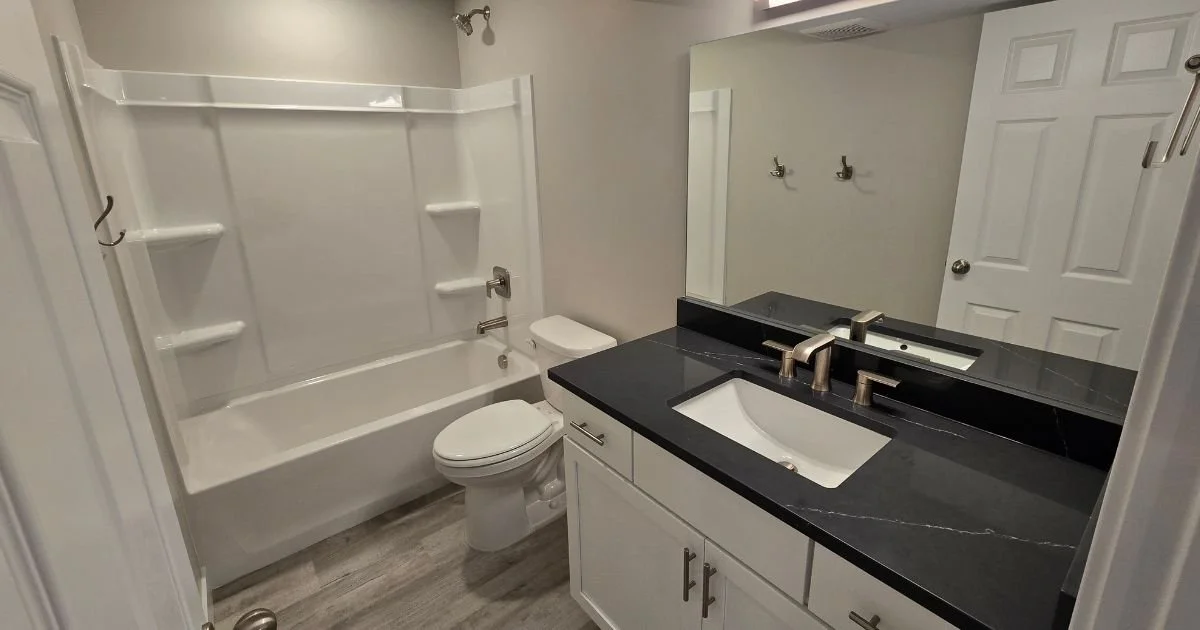
A basement bathroom rough-in is the behind-the-walls, under-the-slab work that makes the finished bathroom possible: drains, vents, water lines, electrical prep, and placement. If the rough-in is accurate, everything that comes after it is cleaner, faster, and far less stressful.
Here’s your Utah homeowner rough-in checklist—the same practical sequence we follow to keep projects efficient and inspection-ready.
Confirm what “bathroom rough-in” includes
At a minimum, a basement bathroom plumbing rough-in typically includes:
Drain lines for toilet, shower/tub, sink (and sometimes floor drain)
Venting plan (tying into the home’s vent stack correctly)
Water supply lines (hot/cold) to sink, toilet, shower/tub
Shower valve placement and blocking needs
Toilet flange location (or stub-out location until final set)
Electrical rough-in: GFCI outlet(s), lighting, fan, switch legs, vanity power
Mechanical prep: bath fan duct route and termination location
Inspection access planning (cleanouts, ejector access if needed)
In other words: rough-in is everything that’s painful to fix once walls and tile go in.
Utah-specific pre-checks (don’t skip these)
Utah basements have a few repeat themes we plan around:
Radon awareness: Utah has areas with elevated radon potential. If you’re finishing a basement, it’s smart to test and plan mitigation early—before you lock everything behind drywall.
Soil and cracking reality: Expansive soils and slab movement happen in parts of Utah. That doesn’t mean you can’t build a beautiful basement bathroom—it means you plan intelligently for waterproofing, movement, and long-term durability.
Freeze and exterior venting: Bath fan ducting needs a clean route that exhausts outdoors properly. Cold snaps make poor ducting show up fast (frosting, condensation, mold).
Gravity drain vs pump: Some basement bathrooms can tie into gravity drains easily; others need an ejector pump depending on elevation and existing sewer line depth.
If you only take one thing from this guide: Utah basements reward good planning. A little upfront thinking saves a lot of money.
Measurements that prevent rework
Most rough-in mistakes are simple placement issues that create expensive domino effects. These are the measurements we confirm early:
Toilet centerline: Mark the toilet centerline from framing, not just concrete. Wall thickness and finishes change the final dimension.
Vanity depth + door swing: A vanity that “fits” on paper can feel tight when the door swings in. Pocket doors or outswing doors can be a game changer in basement bathrooms.
Shower footprint + drain location: Pick the shower pan size early (or at least the final footprint) so the drain lands where it should—especially important for curbless or low-profile showers.
Ceiling height + soffits: Utah basements vary wildly. If ducting or plumbing needs a soffit, plan it so it looks intentional—not like an afterthought.
Quick “pass inspection” checklist
This is the straightforward rough-in checklist that keeps projects moving:
Drain lines routed with proper slope and cleanouts accessible
Venting plan confirmed (no “we’ll figure it out later”)
Toilet location confirmed with framing layout (not just slab marks)
Shower valve height and wall depth confirmed
Water lines secured, pressure tested, and shutoffs planned
Electrical boxes placed for real-life use (mirror lighting, outlets, fan)
Fan duct route planned to terminate outdoors correctly
Waterproofing plan selected for the shower (not just “tile will handle it”)
Photos taken before concrete patch and before insulation/drywall
That checklist alone prevents most of the painful rough-in surprises.
READ: How To Add a Bathroom in Your Basement (Without Plumbing Issues)
Plan the Bathroom Layout Like a Pro (Before Any Concrete Work)
If you want a basement bathroom that feels luxurious and not “basement-y,” layout is your best friend. A good layout can make a modest-size bathroom feel high-end, and it can keep rough-in costs reasonable.
Pick the right bathroom type (half, 3/4, full)
For most Utah basement finishing projects, here’s how we see it:
Half bath (toilet + sink): Lowest cost rough-in, great for theaters and family rooms.
3/4 bath (toilet + sink + shower): Best value for guest use and resale appeal.
Full bath (toilet + sink + tub/shower): Great for kid zones or long-term guest stays, but tub rough-ins can add complexity.
If your goal is everyday function and resale, a 3/4 bath is often the sweet spot: it reads as “complete,” it’s practical for guests, and it’s typically easier to keep within budget than a tub-heavy design.
Ideal placements for Utah basements (stacking wins)
The most cost-friendly basement bathroom rough-in in Utah usually happens when you:
Stack it under an existing bathroom (shared wet wall)
Place it near the mechanical room where utilities are accessible
Keep it close to the main sewer line path to reduce trenching
We can absolutely build a bathroom across the basement if that’s your dream layout—but when we can keep plumbing runs shorter, you win on labor and concrete work.
Clearances that feel luxury (even on a budget)
“Luxury” isn’t just expensive finishes. It’s space that works.
A few comfort choices that don’t cost much at rough-in time:
Leave breathing room in front of the vanity so two people can pass
Avoid forcing the toilet into a tight corner if you can shift it inches
Center lighting and mirror placement so it feels intentional
Plan for a larger shower (or at least a glass-friendly layout)
Small layout decisions create that “this feels like upstairs” experience.
Shower vs tub for value in Utah homes
In many Utah basements, showers win because they:
Fit more layouts
Offer a more modern look
Pair well with guest suites and entertaining spaces
Can be upgraded with affordable luxury: niches, benches, glass, rain heads
If you want the basement to serve as a kid-friendly second living zone, tubs can make sense—but if your goal is a polished guest-ready basement, a shower is usually the most practical investment.
Permits, Codes, and Inspections in Utah
Most cities and counties in Utah require permits for basement finishing when you add or modify plumbing, electrical, or mechanical systems. The rough-in stage is where permits protect you—not just legally, but financially—because they force the work to be done in a way that won’t haunt you later.
When you need a permit (almost always)
You typically need permits when you:
Add a new basement bathroom
Modify or extend plumbing lines
Add circuits, outlets, lighting, or a bath fan
Finish new living space with walls, insulation, and egress considerations
Even if a homeowner could “get away with it,” unpermitted basement bathrooms can complicate resale, insurance claims, and future remodeling.
Typical inspection sequence
While it varies by local jurisdiction, a common rhythm looks like:
Underground plumbing (before backfill and concrete patch)
Rough plumbing / rough electrical / rough mechanical (before insulation/drywall)
Insulation (if required)
Final (fixtures, trims, fans, GFCI, etc.)
The big takeaway: don’t cover work before it’s inspected. That’s where schedules and budgets get wrecked.
What inspectors usually flag in basement bathroom rough-ins
Across Utah, the issues that most commonly slow things down:
Venting that doesn’t meet requirements or isn’t tied in correctly
Missing or inaccessible cleanouts
Improper drain slope or questionable connections
Fan ducting terminating in the wrong place
Electrical outlet/GFCI placement issues near wet areas
A clean rough-in should feel boring. Boring is good. Boring passes.
HOA and city requirements (Salt Lake, Utah County, Davis, Weber)
Requirements can vary by city and county—even within the same metro area. The safest path is working with a contractor who regularly pulls permits in your area and knows how your local inspectors want to see things done.
At Berlin Homes, we plan rough-ins with inspections in mind from day one so you’re not redoing work after the fact.
Drain, Waste, and Vent Rough-In (The Make-or-Break Phase)
Basement bathroom plumbing rough-in is where craftsmanship matters most. Drains and vents aren’t glamorous, but they decide whether your bathroom feels reliable for decades—or becomes a source of recurring issues.
Toilet flange location and drain sizing basics
A toilet rough-in isn’t just “somewhere over there.” It’s a precise location that needs to align with:
Framing and finished wall thickness
The toilet model style (standard vs skirted can affect flexibility)
Comfortable spacing so it doesn’t feel cramped
We also ensure the drain plan is built to move waste efficiently. If a toilet location is wrong by even a few inches, it can cascade into vanity shifts, tight clearances, or an awkward door swing.
Shower/tub drain placement and slope planning
Shower rough-in success comes down to:
Drain landing where the shower system expects it
Proper slope so water moves reliably
Planning for curbs, curbless entries, or linear drains early
If you like the look of curbless showers (a true luxury feel), rough-in planning is essential. Done right, it looks high-end. Done wrong, it becomes a water-management headache.
Venting options and common venting mistakes
Venting is one of the most common DIY and “cheap bid” failure points. Proper venting:
Prevents slow drains and gurgling
Protects trap seals (keeps sewer gases out)
Helps inspections go smoothly
Because venting options depend on your home’s existing configuration, this is where a local, experienced basement finishing contractor in Utah is worth their weight in gold.
Ejector pump vs gravity drain (when it applies in Utah homes)
Some basement bathrooms can drain by gravity into the home’s sewer line. Others can’t, depending on:
Depth of the existing sewer line
Bathroom location relative to the main
Elevation constraints
When gravity isn’t possible, you may need a sewage ejector pump. The key is planning:
Access for maintenance
Quiet operation considerations
Proper venting and placement so it doesn’t interrupt your finished basement design
We aim for solutions that feel seamless—luxury function without the “mechanical room vibe.”
Water Supply Rough-In
Water rough-in is where you can quietly add a lot of quality without spending a fortune.
Hot/cold supply routing (PEX, manifolds, shutoffs)
Many Utah homes use modern supply systems that make basement bathroom tie-ins straightforward. The goals:
Reliable flow to shower and vanity
Shutoffs that are easy to access
Lines routed cleanly so future servicing isn’t a demolition job
We like adding local shutoffs and planning access panels where needed—small cost, big peace of mind.
Water pressure, hard water, and Utah’s mineral reality
Many Utah homeowners deal with hard water. That can affect:
Fixtures (buildup)
Shower performance over time
Longevity of valves and cartridges
Smart, affordable moves:
Choose fixtures known for serviceable cartridges
Consider a water softener strategy if the home doesn’t already have one
Avoid ultra-cheap valves that don’t hold up well under mineral load
This is how you keep “affordable luxury” from turning into frequent repairs.
Future-proofing: shutoffs, access panels, and serviceability
The best basement bathrooms are the ones you never have to open walls for. We plan:
Access to shower valve service points when possible
Clean shutoff placement
Thoughtful routing so future upgrades are doable
Electrical & Mechanical Rough-In
Good electrical planning makes a basement bathroom feel bright, comfortable, and modern—without needing a giant budget.
GFCI requirements and smart outlet placement
Basement bathrooms need safe power planning. The practical homeowner tip:
Plan vanity outlets where you’ll actually use them (not hidden behind a mirror edge)
Consider an outlet near a toilet area if you want a bidet seat later
Keep placement clean so tile and backsplash lines look intentional
Fan ducting that actually moves moisture out
In Utah, winter air and cold attic spaces can make poor fan ducting show up as condensation problems. We plan:
Proper duct routing
Correct termination to the exterior
A fan sized for the space so moisture doesn’t linger
A quiet fan that works well is one of those “luxury feels” you notice daily.
Heated floors and comfort upgrades that stay affordable
If you want one upgrade that feels high-end but doesn’t blow the budget, consider:
Heated tile floors (especially in basement bathrooms)
A comfort-height toilet
Layered lighting (vanity + ceiling + shower-rated fixture where needed)
These upgrades are approachable when planned early—rough-in is where they’re easiest to include.
Lighting layout for a bright, high-end feel
Basement bathrooms can feel dim if lighting is an afterthought. We plan for:
Face-friendly vanity lighting (not harsh shadows)
A clean ceiling fixture layout
Shower-safe lighting where appropriate
The goal is a bathroom that feels like it belongs upstairs.
Waterproofing, Moisture, and Radon (Utah Basement Must-Dos)
Utah basements can be incredibly comfortable—if you respect moisture management.
Vapor management and why basements “feel damp”
Basements naturally interact with ground moisture and temperature differences. The fix isn’t panic—it’s proper layering:
Smart insulation strategy
Correct vapor management approach for the wall system
Sealed penetrations and careful transitions
Shower waterproofing systems that last
Tile is not waterproof. The system behind it matters.
A durable shower build includes:
A modern waterproofing system (not just “extra thinset”)
Proper slope
Sealed corners, niches, and penetrations
This is one of the best places to invest for long-term confidence.
Radon considerations and rough-in timing
If radon mitigation is needed, the best time to address it is before finishes go in. Testing and planning early keeps the solution clean and unobtrusive.
Pre-Drywall Walkthrough and Final Rough-In Prep
This is where good contractors shine: catching small issues before they become expensive.
Pressure tests, leak checks, and photo documentation
Before drywall:
Pressure test supply lines where applicable
Confirm drain function and venting behavior
Take photos of plumbing and electrical paths for future reference
Homeowners love having these photos later when they want to hang cabinets, add shelving, or upgrade fixtures.
Backfill and concrete patch tips
When concrete is opened for drains:
Proper backfill matters for stability
Concrete patches should be solid and level for finished flooring
A clean patch now means a smoother tile or LVP install later.
Soundproofing and insulation around bathroom walls
If you want a basement that feels truly high-end:
Add sound control in bathroom walls (especially around plumbing)
Insulate smartly so temperature stays comfortable year-round
Quiet is a luxury people feel immediately.
Common Rough-In Mistakes (And How to Avoid Them)
Here are the repeat offenders we see in basement remodels across Utah:
Misplaced toilet flange
Even minor misplacement can force weird compromises. Avoid it by confirming finished wall thickness and framing before final placement.
No cleanouts / poor access
If access is blocked, future maintenance becomes destructive. Plan access like you plan style: intentionally.
Bad venting or undersized drains
This is where “cheap now” becomes “expensive forever.” Proper venting prevents slow drains, odors, and inspection problems.
Forgetting niches, grab bars, and door swings
Want a shower niche? Want future grab bars? Want a door that doesn’t collide with the vanity?
Plan blocking, framing, and swing clearances early—it costs little and feels thoughtful.
Cost Expectations and Value in Utah
Basement bathroom rough-in cost varies because the house dictates the difficulty.
What drives basement bathroom rough-in cost
The biggest drivers:
Distance to main sewer line and vent stack
Concrete cutting and trenching needs
Whether an ejector pump is required
Complexity of venting and tie-ins
Electrical additions (new circuits, fan duct route complexity)
Where to invest for “luxury feel” without luxury spend
High-impact, reasonable-cost upgrades when planned early:
Larger shower footprint or better layout
Heated floors (selective use)
Quiet, effective fan
Great lighting plan
Quality shower valve and waterproofing system
These choices make the bathroom feel expensive—even when the budget is controlled.
ROI and buyer appeal in Utah neighborhoods
A well-finished basement with a bathroom increases usability and buyer appeal. In many Utah markets, a basement bathroom helps your home compete because it turns the lower level into true living space—not just storage.
READ: How Much Does It Cost to Finish a Basement in Utah? 2026 Guide
A basement bathroom isn’t just another checkbox. In Utah homes, it’s often the feature that turns a finished basement into a space your family uses daily—and one guests feel comfortable in.
If you’re planning a basement finish or remodel, start with a solid rough-in plan. It keeps everything else smoother, faster, and more enjoyable—exactly how a remodeling experience should feel.
When you’re ready, Berlin Homes can help you plan the bathroom layout, rough-in strategy, and finish selections so your basement feels luxurious and attainable from day one.
