
Basement Finish vs Basement Remodel: What’s the Difference?
When your home starts feeling tight, it’s natural to look around and wonder where you could “borrow” space without changing your address. In Utah, the answer is often sitting right under your feet. A basement can become a bright family room, a guest suite, a home gym, a theater, or even a basement apartment—without the price tag of a full addition.
But homeowners hit a common speed bump early: “Do we need a basement finish, or a basement remodel?” Those terms get tossed around like they mean the same thing. They don’t—and picking the right one matters for budget, timeline, and the kind of results you can expect.
Basement Finish vs Basement Remodel
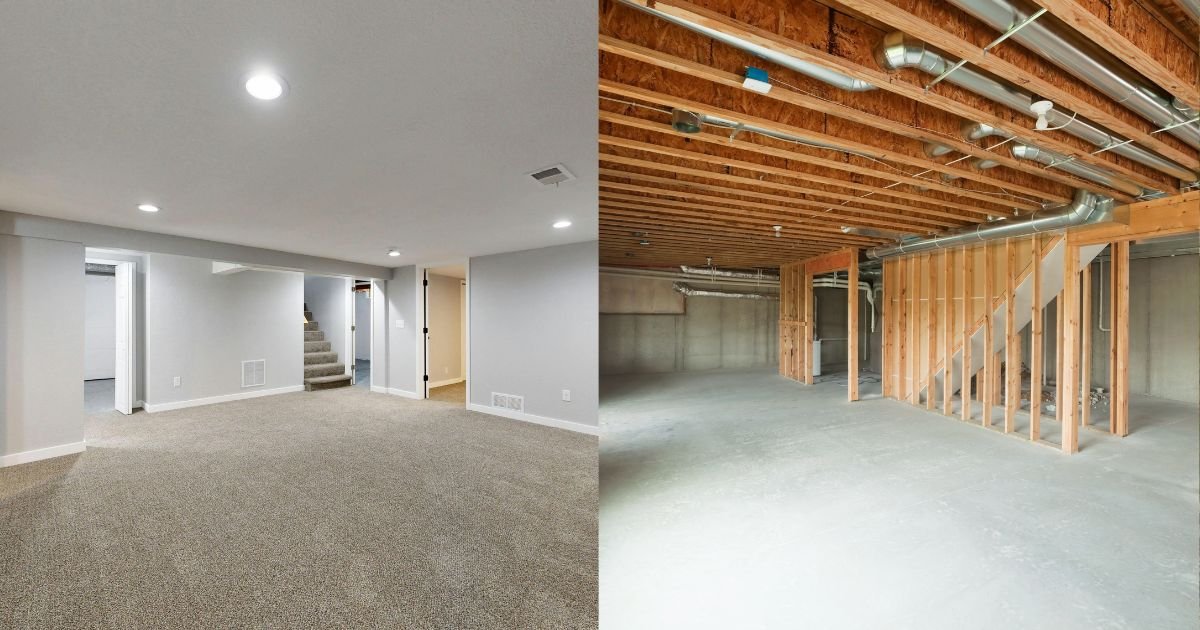
A basement finish turns an unfinished basement into livable space for the first time. A basement remodel improves or changes a basement that’s already finished.
That’s the core difference—and it affects everything: design, scope, cost, and how much of the space gets opened up during construction.
What “basement finishing” means
A basement finishing project starts with a basement that’s mostly bare: concrete floors, exposed framing or foundation walls, visible ductwork, and open mechanicals. The goal is to create comfortable, code-compliant, fully livable square footage.
A basement finish typically includes:
Framing and drywall
Insulation and moisture protection
Electrical, lighting, and outlets
HVAC supply/returns (as needed)
Flooring and trim
Doors, paint, ceilings, and finished details
Bathrooms, wet bars, or small kitchenettes (optional)
If your basement looks like a storage zone with a furnace and a few lonely light bulbs, you’re likely talking about basement finishing.
What “basement remodeling” means
A basement remodel starts with a basement that already has finished walls, flooring, and living areas—but it’s outdated, poorly laid out, or no longer fits how your family lives.
A basement remodel often involves:
Reconfiguring rooms or opening walls
Upgrading finishes (flooring, cabinets, trim, paint)
Improving lighting and ceiling height feel
Updating bathrooms or adding a better kitchenette
Fixing comfort issues (cold rooms, poor airflow, sound transfer)
Correcting old workmanship or code concerns
If you already have a “finished basement” but it feels dark, chopped up, dated, or awkward—remodeling is likely the right move.
The easiest way to tell which project you’re planning
Here’s the quick, homeowner-friendly test:
If you’re building living space where it doesn’t exist yet: that’s a basement finish.
If you’re improving or changing living space that already exists: that’s a basement remodel.
If you’re somewhere in the middle—like a basement that’s partially finished with one old room and exposed ceilings—don’t worry. Many Utah homes have “half-finished” basements, and we can help you define whether it’s a finish, a remodel, or a hybrid scope that keeps costs in check.
What Counts as a Basement Finish in Utah
A true Utah basement finish is about more than making it look nice. It’s about making it feel like it always belonged in the home—warm in winter, comfortable in summer, quiet, bright, safe, and built to last.
Typical scope: framing, insulation, drywall, flooring, ceilings, lighting
Most basement finishing projects follow a predictable build sequence, and each step affects comfort and quality:
Layout + framing: Creating rooms, hallways, storage, and mechanical access
Insulation: Critical for Utah winters and for keeping the basement from feeling like a cold sink
Electrical + lighting: Moving from “one overhead bulb” to layered lighting that feels upscale
Drywall + trim: Where the basement stops looking like a project and starts looking like a home
Ceilings: Drywall ceiling, soffits, or a clean drop ceiling depending on access needs
Flooring: Basement-friendly options that handle temperature swings and daily use
If you want the space to feel high-end without overspending, the “quiet luxury” choices matter here: consistent trim profiles, thoughtful lighting, and clean transitions between flooring types.
“Finish-ready” basements vs older/unfinished basements
Utah has a lot of newer construction with what we call finish-ready basements—good headroom, solid mechanical placement, newer concrete, and a layout that’s easier to build around. These can be more straightforward to finish.
Older homes can still finish beautifully, but they sometimes require more prep:
Moisture control upgrades
Adjustments for low beams or ductwork
Updates to electrical panels or HVAC distribution
Egress improvements if you’re adding bedrooms
The goal is the same in both cases: create a basement that feels like a natural extension of the home, not an afterthought.
Utah code and comfort basics: insulation, egress, ventilation
Utah basements have a few priorities that come up again and again:
Insulation matters more than most homeowners expect. It’s the difference between “nice basement” and “we don’t use it in winter.”
Egress requirements are non-negotiable for bedrooms. If you’re adding a bedroom, you’ll need an egress window or door solution that meets code.
Ventilation and airflow keep the space fresh. Basements can feel stuffy if returns, supplies, and door undercuts aren’t planned correctly.
A basement finish done right isn’t just prettier—it’s noticeably more comfortable.
What Counts as a Basement Remodel
A basement remodel is where you already have finished square footage, but it isn’t delivering the experience you want. This is common in Utah homes where a previous owner finished the basement quickly, or where styles from 10–20 years ago no longer feel current.
Reworking an existing finished basement
Basement remodels can be as simple as “make it look modern,” or as complex as “change everything.”
Common remodel goals:
Replace worn carpet with basement-friendly flooring
Add better lighting and remove the “dim basement” feel
Update trim, doors, paint, and fixtures
Rebuild a dated wet bar into a clean, modern entertaining area
Improve storage so the basement stays tidy
A quality remodel isn’t just cosmetic—it fixes the reasons you don’t love being down there.
Layout changes, structural changes, and “opening things up”
If the basement feels chopped into tiny rooms, a remodel may involve:
Removing or moving non-structural walls
Adding larger openings for sightlines and natural flow
Reworking stair landing areas for a better arrival experience
Adjusting soffits and ceiling lines so the space feels taller
Sometimes “luxury” is simply a smarter layout. When the basement functions well, it automatically feels higher-end.
Upgrading materials and systems: electrical, plumbing, HVAC
Many older basement finishes suffer from:
Too few outlets
Harsh or insufficient lighting
Noisy HVAC runs
Bathrooms that feel builder-basic or cramped
A remodel is your opportunity to bring the basement up to the standard of the rest of the home—without rebuilding everything above it.
Costs and Value: Finish vs Remodel
If you’re comparing basement finishing cost in Utah versus remodeling, the “cheaper vs more expensive” answer depends on what already exists and what you’re trying to change.
Why finishing usually costs less than remodeling
This surprises people: a basement remodel can sometimes cost as much as finishing—especially if the existing work needs to be undone.
Finishing is building forward in a clean sequence.
Remodeling can include demolition, corrections, and rebuilding—sometimes while working around existing HVAC, wiring, and plumbing.
If your basement is already finished well and you’re mainly upgrading surfaces, remodeling can be efficient. If the basement was finished poorly, remodeling may involve rework that adds cost.
The biggest cost drivers in both projects
Whether you’re finishing or remodeling, these items move the budget most:
Bathrooms and plumbing additions (new drains, venting, shower builds)
Kitchens/wet bars (cabinets, counters, appliances, plumbing)
Bedrooms that require egress
Ceiling complexity (soffits, ductwork relocation, access needs)
Upgraded lighting plans (recessed lights, sconces, zones, dimmers)
Soundproofing and insulation upgrades
Custom built-ins (the most “luxury for the dollar” when done strategically)
We like helping homeowners choose upgrades that look expensive, but don’t necessarily cost expensive—lighting, trim consistency, door styles, and thoughtful built-ins are perfect examples.
To learn more about how much does it cost to finish a basement in Utah by clicking the button below:
Timeline for a basement finishing project
A basement finishing project typically moves through:
Design + selections
Permits (where required)
Framing + rough-ins
Inspections
Drywall, paint, trim
Flooring, fixtures, finishing touches
Finishing tends to be more predictable because you’re building in a clean, organized sequence.
Good “rule of thumb” total time: many pro-finished basements land in the 4–8 week range (construction), with some projects finishing faster and more complex scopes (like adding a bathroom) running longer.
Timeline for a remodel (and why it can stretch)
Remodels can take longer because of unknowns:
Hidden moisture issues behind walls
Electrical that needs updating
Plumbing changes that require more access than expected
Structural or framing surprises from prior work
A good remodel plan includes investigation up front so the budget and timeline don’t get ambushed mid-project. Typical remodel construction time once permits are in hand: ~6–12 weeks, plus investigation + design + permit time.
To learn more about basement finishing read our Ultimate Guide to Basement Finishing in Utah by clicking the button below:
How to keep life manageable during construction
Most Utah families keep living in the home during basement work. The best ways to reduce disruption:
Plan a clear material staging area
Keep a clean daily path for crews
Use dust control and door protection
Communicate weekly milestones so you always know what’s next
A basement project should feel exciting, not chaotic. Professional process is what makes that possible.
How Will I Know If I need to Finish or Remodel My Basement?
Choose a basement finish if…
Your basement is unfinished (concrete floors, exposed utilities)
You’re adding livable square footage for the first time
You want a cohesive plan from framing to finishes
You want the most predictable path from start to completion
Choose a basement remodel if…
Your basement is already finished but outdated or awkward
You’re changing the layout, upgrading materials, or improving comfort
You want better lighting, better flow, and a more modern look
You need to correct workmanship or bring things up to current expectations
A basement finish is how you unlock brand-new living space. A basement remodel is how you transform space you already have into something brighter, smarter, and more enjoyable.
Either way, the best basements don’t happen by accident. They’re planned with comfort, layout, lighting, and value in mind—especially in Utah homes where basements often carry a lot of your day-to-day life.
If you want a basement that feels polished and luxurious but still stays realistic for your budget, Berlin Homes is built for that sweet spot. We’ll help you make confident choices, avoid expensive missteps, and create a basement you’ll be excited to show off.
