
How To Turn Your Basement Into a Home Gym
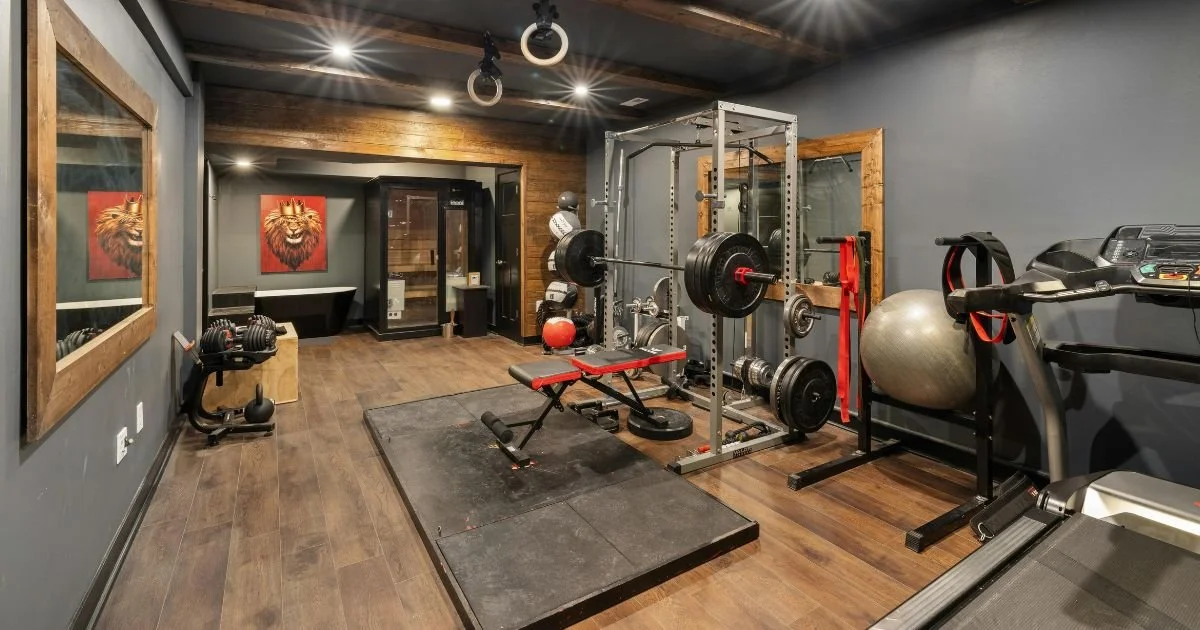
If you have been staring at an unfinished basement and wondering what to do with all that untapped space, this guide is for you. A basement home gym is one of the smartest, most rewarding investments a Utah homeowner can make. It gives you a private, professional-quality fitness space steps from your living room — no commute, no membership fees, no waiting for equipment. And when it is done right, it adds lasting value to your home.
At Berlin Homes, we have helped hundreds of Utah families finish their basements into spaces they love. A home gym is one of our most requested projects, and for good reason. The combination of privacy, convenience, and long-term savings makes it a no-brainer for families who are serious about their health and their home.
This guide walks you through everything — from planning and flooring to lighting, ventilation, and layout — so you can turn your unfinished basement into a gym that rivals any commercial facility in Utah.
Yes, You Can Absolutely Turn Your Basement Into a Home Gym
Let's answer the question directly: your basement is one of the best possible locations for a home gym. It is naturally separated from the main living areas of your home, which means noise and vibration stay contained. It sits below grade, which in Utah's climate means it stays cooler in the summer and holds heat more efficiently in the winter. And because it is typically a wide-open, unfinished canvas, you have complete freedom to design the layout around your exact fitness goals.
Whether you are into powerlifting, yoga, cardio, functional training, or a mix of everything, a finished basement gives you the square footage and structural integrity to support it all. The slab floor can handle the weight of a full rack system. The ceiling height — typically eight to nine feet in most Utah homes — gives you room to hang gymnastic rings, install pull-up bars, or set up overhead cable systems.
The real question is not whether your basement can become a home gym. It is how to do it right.
Planning Your Basement Home Gym: Where to Start
Assess Your Space and Set a Vision
Before a single tool is picked up, you need to understand your basement as it stands today. Walk the space. Measure it. Note where the mechanicals are — your furnace, water heater, electrical panel, and any load-bearing columns. These elements will define the shape of your gym, and a good basement finishing contractor will help you work around them creatively rather than fighting them.
Ask yourself what kind of training you do most. A powerlifter needs open floor space and a heavy-duty rack zone. A yogi or Pilates practitioner needs clean open space with mirrored walls. A cardio enthusiast needs room for a treadmill, bike, or rower. Most Utah homeowners we work with want a little of everything — a functional space where they can lift, stretch, sweat, and recover all in one place.
Write down your must-haves and your nice-to-haves. This list becomes the foundation of your design conversation with your contractor.
Set a Realistic Budget
A basement home gym is one of the more flexible basement finishing projects in terms of budget. At Berlin Homes, we work with clients across a wide range of price points, and the beauty is that you can phase the project. Finish the space now — the walls, flooring, lighting, and ventilation — and add equipment over time as your budget allows.
A well-finished basement gym in Utah typically starts in the range that covers structural finishing, insulation, drywall, flooring, and lighting. Equipment costs are separate and entirely up to you. The good news is that once the bones of the space are right, even a modest equipment investment goes a long way.
Understand Utah's Climate Considerations
Utah's climate plays a real role in how your basement gym should be finished. Our winters are cold and dry, and our summers bring intense heat. A properly insulated basement stays comfortable year-round with minimal HVAC load, but you need to do it right from the start.
Moisture is the other factor. While Utah is generally an arid state, basements can still develop moisture issues — particularly in areas like Salt Lake Valley and along the Wasatch Front where seasonal snowmelt and irrigation can affect soil moisture. Before finishing your gym, a good contractor will assess and address any moisture concerns, ensuring your investment is protected for decades.
Flooring: The Foundation of Every Great Home Gym
Why Gym Flooring Deserves Serious Thought
The floor you choose for your basement gym will affect everything — your safety, the longevity of your equipment, the noise levels in the rest of your house, and the overall look and feel of the space. This is not a place to cut corners.
Basement gym flooring needs to accomplish several things at once. It needs to cushion impact for jumping and explosive movements. It needs to protect the concrete slab from heavy equipment. It needs to dampen sound and vibration so your upstairs family members are not rattled every time you deadlift. And it needs to look sharp, because a gym you love to look at is a gym you actually use.
The Best Flooring Options for a Basement Gym
Rubber flooring is the gold standard for home gyms. Dense rubber tiles or rolled rubber — typically three-eighths to three-quarters of an inch thick — provide excellent impact absorption, are virtually indestructible, and clean up easily. They are especially important under free weight areas and squat racks. For most of our Utah clients, rubber flooring in the lifting zone is non-negotiable.
Luxury vinyl plank is a fantastic complement to rubber zones. It brings warmth, visual appeal, and a finished, polished look to cardio areas, stretching zones, and pathways. Modern LVP is waterproof, durable, and indistinguishable from hardwood at a fraction of the cost — which fits perfectly with our philosophy at Berlin Homes of delivering luxury results at practical price points.
Foam tiles work well for dedicated yoga or martial arts spaces where comfort underfoot is the priority. They are less durable than rubber under heavy weights, so keep them away from your rack and barbell zone.
The ideal basement gym uses a combination — rubber under weights and machines, LVP or polished concrete in transitional areas, and foam where softness matters most. This zoned approach not only looks intentional and professional, it serves each area of the gym exactly as it should.
Walls, Mirrors, and Finishing Details That Elevate the Space
Drywall, Insulation, and Soundproofing
A finished basement gym starts with properly insulated and drywalled walls. In Utah, we recommend closed-cell spray foam or rigid foam board insulation on exterior basement walls before framing and drywall. This combination creates a moisture-resistant, thermally efficient envelope that keeps your gym comfortable in every season.
Soundproofing is a priority for most homeowners with active families. Adding mass-loaded vinyl or acoustic insulation between wall studs significantly reduces the transmission of sound and vibration to the upper floors. This is especially important if your gym sits beneath a bedroom or living area.
For the ceiling, an exposed painted ceiling — what we call an industrial finish — is incredibly popular in gym spaces. It eliminates the drop ceiling, maximizes your headroom, and gives the space an intentional, high-end feel. Painting it a dark color like charcoal or matte black, as seen in high-end gyms, creates visual drama and hides mechanicals cleanly.
The Power of Mirrors
Mirrors in a home gym are not a luxury — they are a training tool. Full-length mirrors on one or two walls allow you to monitor your form, which reduces injury risk and accelerates your progress. They also make the space feel significantly larger and brighter.
We typically install mirror panels from floor to ceiling along at least one wall, often the primary lifting wall. Custom-framed mirrors with wood or metal trim can also become a design feature in their own right, adding warmth and character to the space.
Accent Walls and Personalization
Your basement gym should feel like yours. One of the most impactful ways to personalize the space is through an accent wall — wood shiplap, reclaimed wood planks, industrial brick veneer, or a bold painted feature wall. The image of a well-designed gym always includes something that anchors the room visually, and the accent wall is usually it.
At Berlin Homes, we love pairing warm wood tones with dark walls and industrial lighting. It creates a space that feels both rugged and refined — which is exactly the energy you want when you are pushing through a hard set.
Walls, Mirrors, and Finishing Details That Elevate the Space
Drywall, Insulation, and Soundproofing
A finished basement gym starts with properly insulated and drywalled walls. In Utah, we recommend closed-cell spray foam or rigid foam board insulation on exterior basement walls before framing and drywall. This combination creates a moisture-resistant, thermally efficient envelope that keeps your gym comfortable in every season.
Soundproofing is a priority for most homeowners with active families. Adding mass-loaded vinyl or acoustic insulation between wall studs significantly reduces the transmission of sound and vibration to the upper floors. This is especially important if your gym sits beneath a bedroom or living area.
For the ceiling, an exposed painted ceiling — what we call an industrial finish — is incredibly popular in gym spaces. It eliminates the drop ceiling, maximizes your headroom, and gives the space an intentional, high-end feel. Painting it a dark color like charcoal or matte black, as seen in high-end gyms, creates visual drama and hides mechanicals cleanly.
The Power of Mirrors
Mirrors in a home gym are not a luxury — they are a training tool. Full-length mirrors on one or two walls allow you to monitor your form, which reduces injury risk and accelerates your progress. They also make the space feel significantly larger and brighter.
We typically install mirror panels from floor to ceiling along at least one wall, often the primary lifting wall. Custom-framed mirrors with wood or metal trim can also become a design feature in their own right, adding warmth and character to the space.
Accent Walls and Personalization
Your basement gym should feel like yours. One of the most impactful ways to personalize the space is through an accent wall — wood shiplap, reclaimed wood planks, industrial brick veneer, or a bold painted feature wall. The image of a well-designed gym always includes something that anchors the room visually, and the accent wall is usually it.
At Berlin Homes, we love pairing warm wood tones with dark walls and industrial lighting. It creates a space that feels both rugged and refined — which is exactly the energy you want when you are pushing through a hard set.
Turning your unfinished Utah basement into a home gym is one of the most rewarding decisions you will make as a homeowner. It combines practical utility, lasting financial value, and a daily quality-of-life improvement that you will feel every single morning you lace up your shoes and head downstairs.
The key is doing it right from the start — with proper insulation, smart flooring choices, intentional lighting, sufficient ventilation, and a layout built around how you actually train. Done well, a basement home gym is not just functional. It is inspiring. It is a space that motivates you to show up, push harder, and recover fully. It is the kind of space you are proud to show off and excited to use.
At Berlin Homes, we have been building spaces like this for Utah families for years. We understand the climate, the homes, the lifestyle, and what it takes to deliver a finished basement that genuinely exceeds expectations. If you are ready to stop looking at that empty space below your feet and start building something extraordinary, we are ready to help.
Reach out to Berlin Homes today to schedule your free consultation. Let's build your dream gym together.
