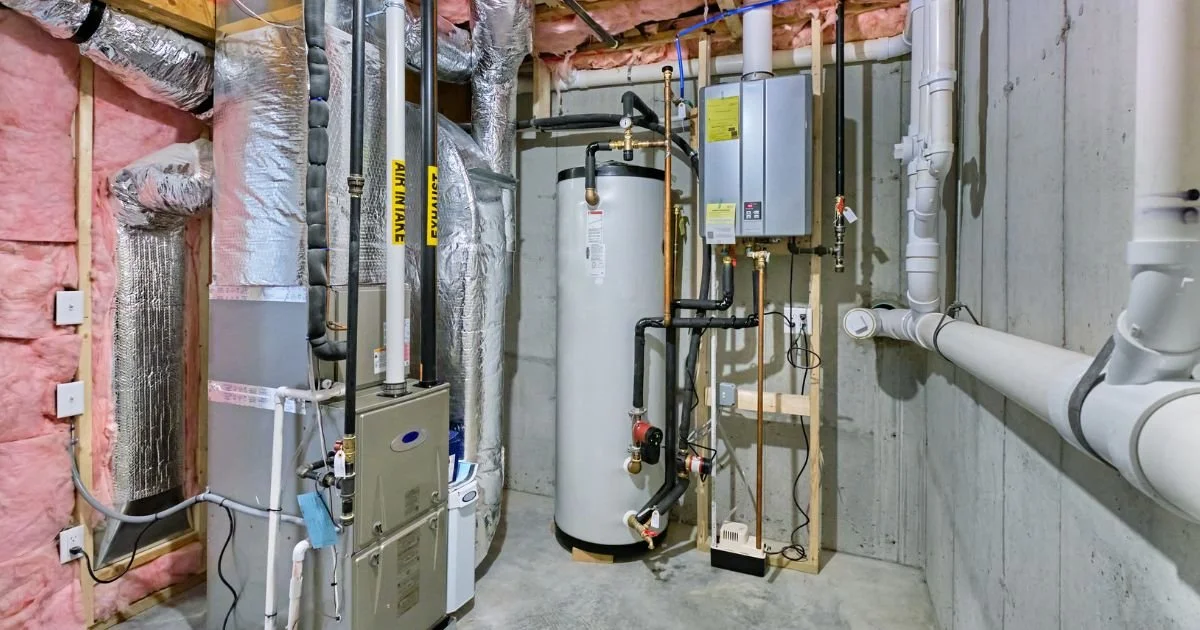
A finished basement can become one of the most comfortable spaces in your home, but maintaining the right temperature isn't always easy. Utah's hot summers and cold winters can make basements feel chilly, stuffy, or noticeably different from the rest of the house.
The good news is that several basement heating and cooling options can help you enjoy your space throughout the year. The right solution depends on your basement's layout, insulation, existing HVAC system, and how you plan to use the space.
What Is the Best Way to Heat and Cool a Basement Year-Round?
The best way to heat and cool a basement year-round is to use a properly sized HVAC system that provides consistent temperature control, supported by good insulation and airflow. For many Utah homeowners, extending an existing central HVAC system or installing a ductless mini-split heat pump offers the most practical solution.
If your home's current heating and cooling system has enough capacity, extending the ductwork may be a cost-effective option. However, if you want independent temperature control or your existing system cannot handle the additional space, a ductless mini-split may be a better fit.
Basements also have different heating and cooling requirements than above-ground rooms. Because much of the space is surrounded by soil, basement temperatures can remain relatively cool during summer but feel uncomfortable during winter.
Before choosing a system, consider how frequently you'll use the basement. A guest bedroom, home theater, and family entertainment area may have different comfort requirements, particularly if several people will occupy the space at once.
Best Basement Heating and Cooling Options
There isn't one heating and cooling system that works perfectly for every basement. Understanding the advantages and limitations of each option can help you make a more informed decision.
1. Extend Your Existing HVAC System
If your home already has central heating and air conditioning, extending the existing ductwork may be one of the most straightforward options for your basement finishing project.
This approach uses your home's current furnace and air conditioner to distribute conditioned air into the basement. When properly designed, it can help maintain comfortable temperatures without installing a completely separate heating and cooling system.
Benefits include:
Uses existing heating and cooling equipment.
May have lower upfront costs than a separate system.
Keeps heating and cooling controls integrated with your home.
Can be incorporated into basement finishing plans.
However, adding vents alone doesn't guarantee better comfort. An HVAC professional should first determine if the existing equipment can handle the additional heating and cooling demand. Proper supply and return airflow are also important, and some homes may benefit from zoning controls.
2. Install a Ductless Mini-Split System
A ductless mini-split is an excellent option for homeowners who want more control over their basement's temperature without extending their existing ductwork.
These systems use an outdoor unit connected to one or more indoor units. Heat pump models provide both heating and cooling, making them suitable for year-round basement comfort.
Benefits include:
Independent temperature control for the basement.
Energy-efficient heating and cooling.
No need for extensive ductwork.
Quiet operation with properly selected equipment.
Flexible installation options for different layouts.
For Utah homeowners, choosing a cold-climate heat pump model is particularly important. Some systems are specifically designed to provide heating during freezing temperatures, although performance and potential backup heating needs should be evaluated for your location.
A mini-split can work especially well in finished basements used as home offices, entertainment rooms, or guest suites.
3. Consider Radiant Floor Heating
Radiant floor heating can make a finished basement feel especially comfortable during Utah's colder months. Instead of relying on warm air, this system uses heated elements or water-filled tubing beneath the floor to deliver warmth.
It's particularly appealing for basement bathrooms, living areas, and spaces with tile flooring, where cold surfaces can make the room feel less inviting.
Radiant heating provides a comfortable, even source of warmth and can be incorporated into a luxury basement design. However, installation may involve significant floor modifications, and the system doesn't provide air conditioning.
If you're considering radiant heating, it's often easier to plan it before installing your finished basement flooring. For year-round comfort, you'll still need a separate cooling solution if the space requires one.
4. Use Electric Baseboard Heaters
Electric baseboard heaters are another option for basements that need additional warmth during winter. They're relatively simple to install compared with some more extensive heating systems and can be controlled room by room.
This option may work for smaller areas that aren't used frequently, such as an occasional guest room or hobby space. However, electric resistance heating can become expensive to operate when used regularly in larger spaces.
Baseboard heaters also don't provide cooling, so they're generally better suited as supplemental heating rather than a complete year-round comfort solution.
5. Explore Portable Air Conditioning
Portable air conditioners can provide temporary cooling for basements without a dedicated cooling system. They may be useful for smaller spaces or homeowners who aren't ready to invest in permanent HVAC upgrades.
However, many portable units require exhaust venting to the outdoors, can be noisy, and may not cool larger finished basements efficiently. Window units also require suitable window openings and should never interfere with required emergency escape routes.
For a basement you plan to use regularly, a properly designed central HVAC connection or mini-split system will generally offer a more practical long-term solution.
Why Do Utah Basements Feel Colder Than Upstairs?
Many Utah homeowners notice that their basements feel significantly cooler than the main living areas, particularly during winter. This happens because basements interact with the surrounding ground differently than above-ground rooms.
During summer, the surrounding soil can help moderate basement temperatures. However, in winter, heat can escape through poorly insulated foundation walls, rim joists, windows, and other areas.
Several factors can contribute to uncomfortable basement temperatures:
Insufficient insulation: Uninsulated foundation walls and rim joists allow unwanted heat transfer.
Limited heating distribution: Basements may receive less conditioned air than upstairs rooms.
Air leaks: Gaps around windows, doors, and penetrations can introduce cold outdoor air.
Cold flooring: Concrete slabs can make a room feel chilly even when the air temperature is reasonable.
Poor thermostat placement: A thermostat upstairs may not accurately reflect basement conditions.
The solution isn't always installing a larger heating system. Improving insulation, reducing air leaks, and correcting airflow problems can sometimes make a noticeable difference without requiring major HVAC upgrades.
READ: What Basement Insulation Works Best Against Cold Concrete Walls
How to Keep Your Basement Comfortable and Energy-Efficient
Choosing the right heating and cooling equipment is important, but your basement's construction also plays a major role in maintaining comfortable temperatures.
Insulate Basement Walls Properly
Proper insulation helps reduce heat loss during winter and unwanted heat gain during warmer weather. It can also make your heating and cooling system more effective by reducing how much energy is needed to maintain comfortable indoor temperatures.
For Utah basement finishing projects, pay particular attention to foundation walls, rim joists, and areas around windows. Basement insulation should also be designed to manage moisture and condensation appropriately.
Address any existing water intrusion or moisture issues before installing insulation and finished wall materials.
Improve Airflow and Temperature Control
Good airflow helps conditioned air reach the areas where it's needed. If your basement has several rooms, a single vent or indoor mini-split unit may not distribute air evenly throughout the entire space.
A professionally designed HVAC layout can account for room sizes, doors, and the activities taking place in each area. Separate temperature controls may also be useful if the basement has different heating and cooling needs from the upstairs living spaces.
For example, a basement home theater may become warmer when several people are watching a movie, while an unused guest bedroom may need less conditioning.
Address Moisture and Humidity
Although Utah has a relatively dry climate, basements can still experience moisture problems. Water intrusion, condensation, and inadequate ventilation can affect comfort and contribute to mold growth.
Before finishing your basement, inspect the foundation for signs of moisture and address any drainage or waterproofing concerns.
A dehumidifier may help manage excess humidity when needed, but it won't solve an active water leak or replace proper ventilation. Combining moisture control with appropriate insulation and heating and cooling equipment creates a healthier, more comfortable finished space.
READ: Common Basement Insulation Mistakes (And How To Avoid Moisture Problems)
How Much Does Basement Heating and Cooling Cost?
The cost of heating and cooling a basement depends on your home's existing system, basement size, installation complexity, and the equipment you choose.
Rather than focusing only on the purchase price, consider both upfront installation expenses and long-term operating costs.
| Heating and Cooling Option | General Cost Consideration | Best For |
|---|---|---|
| Extending Existing HVAC | Potentially cost-effective if existing equipment has adequate capacity | Basements connected to central HVAC |
| Ductless Mini-Split | Higher initial investment, with efficient heating and cooling | Independent basement temperature control |
| Radiant Floor Heating | Installation can be costly, especially when retrofitting floors | Warm, comfortable floors |
| Electric Baseboard Heating | Relatively low installation cost, potentially high operating cost | Smaller rooms needing supplemental heat |
| Portable Air Conditioner | Lower initial equipment cost, with limitations in efficiency and coverage | Temporary or occasional cooling |
One of the smartest ways to manage costs is to plan your heating and cooling system before beginning basement construction. This allows the necessary electrical, ductwork, insulation, and equipment placement to be incorporated into the overall design.
It can also reduce the likelihood of opening finished walls or ceilings to make HVAC changes later.
How to Choose the Right HVAC System for Your Finished Basement
The best heating and cooling option is one that fits your basement's size, intended use, and long-term budget. Before making a decision, follow these steps to narrow down your options.
Step 1: Identify how you'll use your basement. A full-time basement apartment or home office will generally need more consistent temperature control than a storage room or occasionally used recreation area.
Step 2: Evaluate your existing HVAC system. Have an HVAC professional check your current equipment, ductwork, and available capacity before deciding to extend the system.
Step 3: Check insulation and moisture conditions. Address air leaks, foundation moisture, and insulation issues before selecting or installing new equipment.
Step 4: Request a heating and cooling load calculation. A professional Manual J calculation helps determine the appropriate system capacity based on your basement's actual heating and cooling requirements. Oversized equipment can be inefficient and uncomfortable, just like undersized equipment.
Step 5: Compare installation and operating costs. Consider equipment efficiency, maintenance requirements, installation work, and the possibility of separate temperature controls.
Step 6: Coordinate HVAC plans with basement finishing. Finalize equipment placement, ductwork routes, ventilation, and necessary permits before closing walls and ceilings.
For homeowners in Eagle Mountain, Saratoga Springs, Lehi, and surrounding Utah communities, planning these details early can help create a basement that's comfortable during both summer heat and winter cold.
A beautifully finished basement should feel just as welcoming as the rest of your home. With the right heating and cooling system, proper insulation, and thoughtful planning, you can turn an uncomfortable lower level into a space your family enjoys throughout the year.
At Berlin Homes, we believe basement finishing should combine comfort, functionality, and beautiful design without unnecessary expenses. Our team helps Utah homeowners plan finished basements that fit their lifestyles, from cozy family rooms and home theaters to guest suites and home offices.
If you're planning a basement finishing project in Utah, Berlin Homes can help you explore practical layout and finishing options while coordinating your comfort goals with the appropriate HVAC professionals. A well-designed basement is one you'll want to use in every season.